
Quick answer: Both antagonist and agonist IVF protocols stop you ovulating too early so eggs can be collected. The antagonist protocol is shorter, needs fewer injections and has a lower risk of ovarian hyperstimulation, so guidelines prefer it for most women. The long agonist protocol is still useful in selected cases, and live birth rates are broadly similar.
Key takeaways
- The main job of both protocols is to prevent a premature LH surge, which would release eggs before collection.
- The antagonist protocol starts on day 2 of the period and lasts about 10 to 12 days of injections.
- The long agonist protocol starts in the previous cycle and usually takes three to four weeks in total.
- The antagonist protocol lowers OHSS risk, which matters especially for women with PCOS or high AMH.
- The best protocol depends on your age, AMH, diagnosis and previous response, not on a single rule.
Why is controlling the LH surge so important in IVF?
In a natural cycle, a surge of luteinising hormone (LH) from the brain triggers ovulation. During IVF, several follicles grow at once, and if this surge happens too early the eggs may be released before they can be collected.
Both protocols use medicines that act on gonadotropin-releasing hormone (GnRH) receptors in the pituitary gland to prevent this. They differ in how and when they do it.
How does the GnRH agonist (long) protocol work?
A GnRH agonist first briefly stimulates the pituitary, then switches it off when given continuously. This is called down-regulation.
- Agonist injections or nasal spray usually start around day 21 of the previous cycle.
- After about 10 to 14 days, a scan and blood test confirm the ovaries are quiet.
- Stimulation injections (FSH, sometimes with LH) are added for about 10 to 12 days, while the agonist continues.
- An hCG trigger is given when follicles are ready, followed by egg collection.
Who may benefit from an agonist protocol
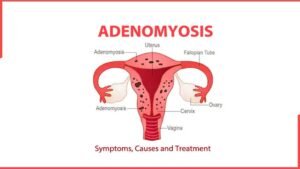
- Some women with endometriosis or adenomyosis, particularly when a frozen transfer is planned
- Situations where very precise cycle scheduling is needed
- Women who responded well to it in a previous cycle
How does the GnRH antagonist protocol work?
A GnRH antagonist blocks the pituitary receptors immediately, without an initial flare. This makes the protocol shorter and more flexible.
- Stimulation injections start on day 2 or 3 of your period.
- The antagonist injection is added after about five or six days, or when the lead follicle reaches around 13 to 14 mm.
- Both continue until the follicles are ready, usually 9 to 12 days in total.
- The trigger can be hCG or, to reduce OHSS risk, a GnRH agonist, followed by egg collection.
Who may benefit from an antagonist protocol
- Most women having IVF for the first time
- Women with PCOS or high AMH, who are at higher risk of OHSS
- Women with low ovarian reserve or a previous poor response
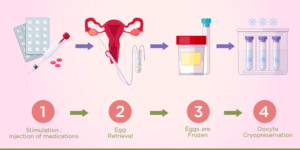
- Egg freezing cycles
Antagonist vs agonist: how do they compare?
The table summarises the key differences.
| Feature | Antagonist protocol | Long agonist protocol |
|---|---|---|
| Start | Day 2 or 3 of the period | Around day 21 of the previous cycle |
| Total duration | About 2 weeks | About 3 to 4 weeks |
| Number of injections | Fewer | More |
| OHSS risk | Lower, especially with agonist trigger | Higher |
| Agonist trigger possible | Yes | No |
| Side effects | Fewer menopause-like symptoms | Hot flushes and headaches during down-regulation |
| Live birth rate | Broadly similar in most studies | Broadly similar in most studies |
| Scheduling | Depends on period start | Easier to plan in advance |
Large reviews, including Cochrane analyses, have found similar live birth rates with both, but a clear reduction in OHSS with the antagonist protocol. ESHRE guidance recommends the antagonist protocol for most women because of this better safety profile.
Are there other IVF protocols?
Yes. Your doctor may suggest one of these in specific situations:
- Short (flare) agonist protocol: occasionally used for poor responders, although it has not been shown to be better than antagonist.
- Progestin-primed ovarian stimulation (PPOS): uses oral progesterone-type tablets to prevent the surge; suitable when all embryos or eggs will be frozen.
- Mild or natural cycle IVF: lower doses or none, used for selected women.
How does your doctor choose the right protocol?
The choice is individual. Your doctor considers:
- Age and ovarian reserve (AMH and antral follicle count)
- Diagnosis, such as PCOS, endometriosis or adenomyosis
- Response in any previous cycle
- Whether a fresh or frozen embryo transfer is planned
- Your schedule and preferences
If a cycle does not go as planned, switching protocol is one of the options discussed in our guide on failed IVF next steps.
When to see a gynaecologist
Contact your doctor straight away during stimulation or after egg collection if you have:
- Severe abdominal pain, rapid swelling or weight gain of more than 1 kg in a day
- Breathlessness, persistent vomiting or passing very little urine
- Heavy bleeding, fever or fainting
These can be signs of OHSS or another complication that needs prompt care.
How Dr. Divya Venugopalan can help
Dr. Divya Venugopalan is a fertility specialist in Bengaluru with a Fellowship in Reproductive Medicine (FRM) and over 14 years of experience. She explains why a particular protocol is recommended for you, what each injection does, and how the plan can change if your response differs from expected.
Learn more about IVF and ICSI. If you have endometriosis, see the endometriosis page for how it affects treatment planning.
Book a consultation at Thanisandra, Sahakar Nagar or HRBR Layout, or call +91 99459 26987.
Frequently asked questions
Which IVF protocol has a higher success rate?
Studies show broadly similar live birth rates with antagonist and long agonist protocols for most women. The antagonist protocol is often preferred because it lowers the risk of OHSS and is shorter.
Is the antagonist protocol suitable for PCOS?
Yes. Women with PCOS have a higher risk of OHSS, and the antagonist protocol, especially with a GnRH agonist trigger and freezing of embryos, reduces this risk significantly.
Why might my doctor choose the long agonist protocol?
It may be chosen for some women with endometriosis or adenomyosis, for easier cycle scheduling, or if it worked well for you before. The decision is individual.
How many injections are needed in an antagonist cycle?
Typically one or two daily stimulation injections for about 9 to 12 days, with an antagonist injection added for the last five or six days, and one trigger injection.
Can I switch protocols if my first cycle did not work?
Yes. Changing the protocol or doses is a common adjustment after reviewing how your ovaries responded. Your doctor will explain whether a switch is likely to help in your case.
Medically reviewed by: Dr. Divya Venugopalan, MBBS, DNB (OBG), FRM, FMAS. Gynaecologist & fertility specialist, Bengaluru (KMC Reg. No. 91293). Last reviewed: 27 October 2026.
This article is for general information and does not replace a personal consultation. In an emergency, visit the nearest hospital emergency department.