
Recurrent Implantation Failure Treatment: Causes and Tests
Quick answer: Recurrent implantation failure (RIF) means good-quality embryos have repeatedly failed to implant after IVF, commonly defined as no pregnancy after three or more good-quality embryo transfers. Treatment depends on the cause: embryo chromosomal problems, uterine conditions such as polyps or adhesions, a thin lining, hydrosalpinx, thyroid or clotting disorders. Many couples conceive after targeted evaluation.
Key takeaways
- RIF is about embryos not implanting; it is different from recurrent miscarriage, where pregnancies begin but are lost.
- The most common cause is chromosomal abnormality in the embryo, which becomes more frequent with the woman’s age.
- A structured check of the embryo, uterus, endometrium and general health guides treatment.
- Many “add-on” treatments lack good evidence; ESHRE advises against using them routinely.
- RIF is stressful, and emotional support is part of good care.
What is recurrent implantation failure?
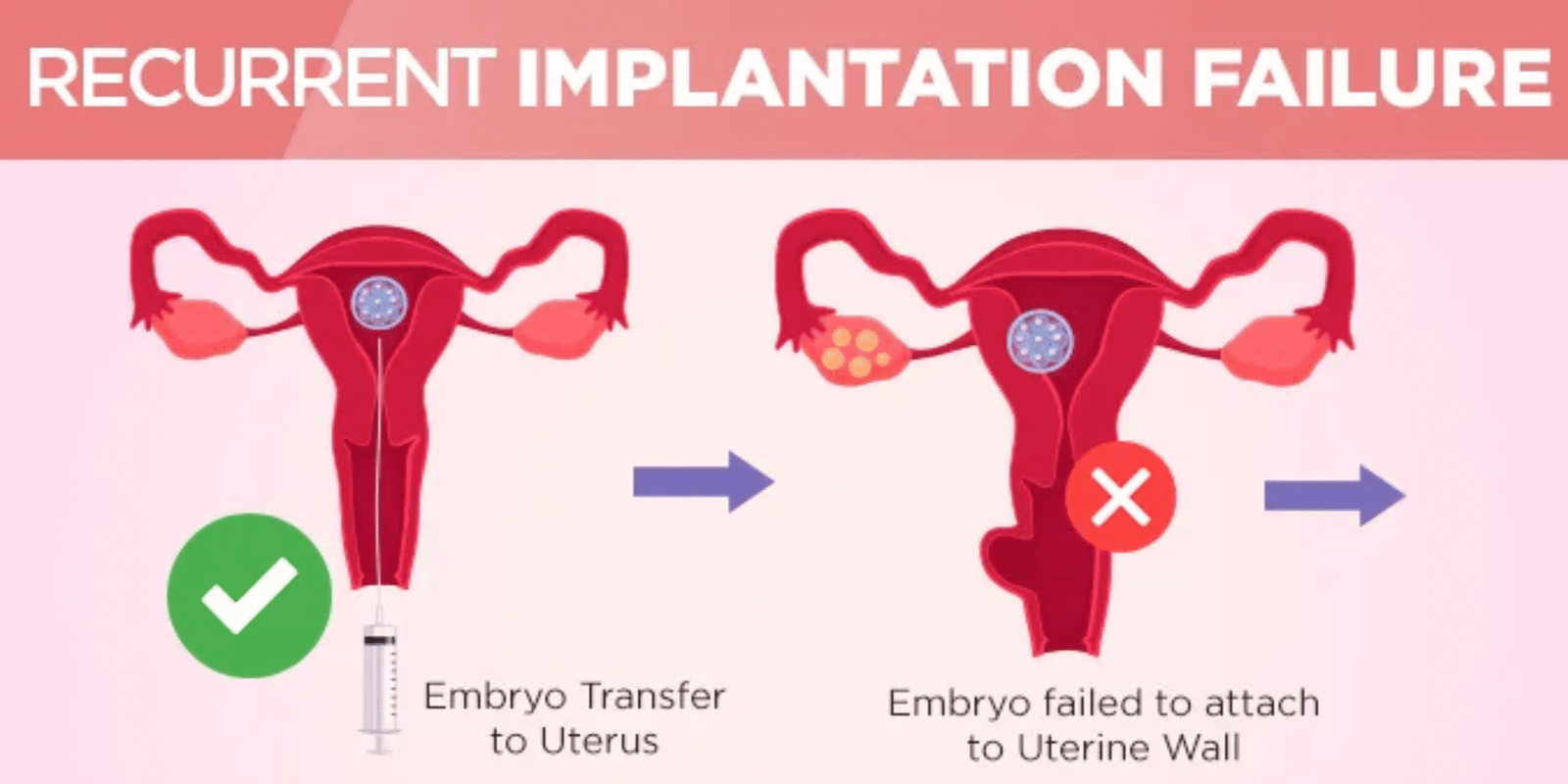
Implantation is the moment an embryo attaches to the lining of the uterus (the endometrium) and begins to grow. RIF is diagnosed when this repeatedly does not happen despite transferring embryos expected to have a good chance.
There is no single international definition. A practical one is failure to achieve a clinical pregnancy after three or more transfers of good-quality embryos, or after a total of about four good embryos in a woman under 40. ESHRE’s 2023 guidance encourages assessing each couple’s expected chance rather than counting cycles alone.
What causes recurrent implantation failure?
Embryo factors
- Chromosomal abnormalities (aneuploidy), the most common cause, particularly after age 35.
- Sperm factors, including high DNA fragmentation in some men.
- Laboratory and culture conditions.
Uterine and endometrial factors
- Polyps, submucous fibroids, a uterine septum or intrauterine adhesions.
- A persistently thin endometrium.
- Chronic endometritis (low-grade inflammation of the lining).
- Adenomyosis and endometriosis.
- Hydrosalpinx, where fluid from a blocked tube flows back into the uterus.
General health factors
- Uncontrolled thyroid disease or diabetes.
- Antiphospholipid syndrome in selected cases.
- Obesity, smoking and high alcohol intake.
How is RIF diagnosed? Step by step
- Review of previous cycles. Embryo grades, stimulation response, lining thickness, and transfer technique.
- Uterine evaluation. 3D ultrasound and hysteroscopy to find and treat polyps, adhesions or a septum, sometimes with an endometrial biopsy for chronic endometritis.
- Tubal assessment. To detect a hydrosalpinx.
- Blood tests. Thyroid function, blood sugar, vitamin D, and antiphospholipid antibodies where indicated.
- Genetic tests. Karyotyping of both partners in selected couples.
- Male assessment. Repeat semen analysis and, when relevant, a sperm DNA fragmentation test.
What are the treatment options for RIF?
Treatment targets what the evaluation finds. Not every test or treatment is suitable for every couple.
| Finding | Possible treatment |
|---|---|
| Polyp, fibroid, septum or adhesions | Hysteroscopic removal or correction |
| Hydrosalpinx | Laparoscopic removal or clipping of the tube before the next transfer |
| Chronic endometritis | A course of antibiotics, then re-assessment |
| Chromosomally abnormal embryos suspected | Discussion of PGT-A (embryo genetic testing) or, in some cases, donor eggs |
| Thin endometrium | Adjusting oestrogen protocols or transfer timing |
| Thyroid, sugar or weight issues | Optimising health before the next transfer |
| Antiphospholipid syndrome | Low-dose aspirin and heparin as advised |
Tests such as endometrial receptivity analysis and treatments such as routine immune therapies, steroids or intralipids remain under study and are not routinely recommended.
What are the chances of success after RIF?
Outcomes depend on age, the cause found and embryo quality. When a treatable cause such as a polyp or hydrosalpinx is corrected, the chance of implantation in the next transfer improves. Even when no cause is found, many couples conceive with further transfers of good-quality embryos.
Part of the picture is chance: even a genetically normal embryo transferred to a healthy uterus does not implant every time. Understanding this helps couples decide how many further attempts feel right, and when options such as PGT-A or donor eggs are worth discussing.
Risks, side effects and recovery
Hysteroscopy is a short day-care procedure with mild cramping and spotting for a day or two; serious complications such as perforation or infection are uncommon. Laparoscopy needs one to two weeks of gradual recovery. Medicines may cause minor side effects such as nausea or bruising. After investigations, most couples wait one cycle before the next transfer.
Aftercare and preparing for the next transfer
Use the time between cycles to aim for a healthy weight, stop smoking, limit alcohol and caffeine, continue folic acid and treat any vitamin D deficiency. Keep thyroid and sugar levels in the target range. Emotional support from a counsellor or support group can make the next attempt feel more manageable.
What does RIF evaluation and treatment cost?
Costs depend on which tests are needed, whether hysteroscopy or laparoscopy is performed, embryo genetic testing, medicines, and the number of further frozen embryo transfers. A step-wise plan avoids paying for tests that are unlikely to help.
When to see a doctor
Seek a specialist review after two to three unsuccessful transfers of good-quality embryos, or sooner if you are over 35, have had abnormal scans, painful periods, a history of pelvic infection or a thin lining in previous cycles.
Why choose Dr. Divya Venugopalan
Dr. Divya Venugopalan is a fertility specialist and gynaecologist in Bengaluru with more than 14 years of experience. She holds an MBBS from KIMS, a DNB in Obstetrics & Gynaecology, a Fellowship in Reproductive Medicine (FRM) and a Fellowship in Minimal Access Surgery (FMAS), which allows her to perform diagnostic and corrective hysteroscopy and laparoscopy. She is a member of IFS, ISAR and IAGE.
She reviews every previous cycle in detail and recommends only evidence-based tests. Read about IVF and recurrent pregnancy loss, or book a consultation at Thanisandra, Sahakar Nagar or HRBR Layout.
Frequently Asked Questions
What causes recurrent implantation failure?
The most common cause is chromosomal abnormality in the embryo. Other causes include uterine problems (polyps, fibroids, adhesions, septum), a thin or inflamed endometrium, hydrosalpinx, thyroid disorders, clotting disorders and lifestyle factors.
What tests are done for RIF?
Hysteroscopy, a 3D ultrasound, thyroid and hormone tests, a thrombophilia screen when indicated, karyotyping of both partners in selected cases, and sometimes embryo genetic testing (PGT-A).
Can RIF be treated?
Yes. Treatment targets the cause. It may include hysteroscopic correction, treating a hydrosalpinx, optimising the endometrium, genetic testing of embryos, or managing medical conditions.
Is RIF the same as recurrent miscarriage?
No. In RIF the embryo does not implant, so a pregnancy test stays negative. In recurrent miscarriage, pregnancies begin but are lost, and the causes and tests differ.
Should I try immune treatments for RIF?
Current guidance, including ESHRE’s, does not recommend routine immune treatments such as steroids, intralipids or immunoglobulins for RIF, because there is no good evidence that they improve live-birth rates.
Medically reviewed by: Dr. Divya Venugopalan, MBBS, DNB (OBG), FRM, FMAS. Gynaecologist & fertility specialist, Bengaluru (KMC Reg. No. 91293). Last reviewed: 27 October 2026.
This page is for general information and does not replace a personal consultation. In an emergency, visit the nearest hospital emergency department.
Book a consultation with Dr. Divya → or call +91 99459 26987.