
Sperm Freezing in Bengaluru: Process, Uses and Storage
Quick answer: Sperm freezing (semen cryopreservation) stores a man’s sperm in liquid nitrogen at –196 °C for later use in IUI, IVF or ICSI. It is a simple, non-invasive procedure: a semen sample is collected, tested, mixed with a protective solution and frozen. It is advised before cancer treatment, vasectomy or certain surgeries, and when a partner may be unavailable on treatment day.
Key takeaways
- Sperm freezing is quick, painless and usually needs only a semen sample.
- It should be done before chemotherapy, radiotherapy or surgery that may affect fertility.
- Some sperm do not survive thawing, but enough usually remain for IUI or ICSI.
- Two or three samples are often stored to allow more than one treatment attempt.
- Children born from frozen sperm are as healthy as those conceived with fresh sperm.
What is sperm freezing?
Sperm freezing, also called sperm banking or semen cryopreservation, preserves male fertility by storing sperm at ultra-low temperature, where biological activity effectively stops.
Frozen sperm can be stored for many years and thawed when needed for IUI, IVF or ICSI. Sperm surgically retrieved from the testis or epididymis can also be frozen, which can spare a man a repeat procedure.
Freezing does not change the genetic material of healthy sperm. It simply pauses them in time, so a man who banks sperm at 30 keeps the quality he had at that age, which is particularly reassuring before treatments that may permanently affect fertility.
Who should consider sperm freezing?
- Men about to start cancer treatment: chemotherapy, radiotherapy or surgery can reduce or stop sperm production, sometimes permanently.
- Before a vasectomy, as a back-up for future family plans.
- Before surgery on the testes, prostate or pelvis.
- Men with falling sperm counts or conditions that may worsen with time.
- Men in high-risk occupations or those travelling or working away from home.
- Couples having IVF or IUI, when the partner may not be available, or may find producing a sample on the day stressful.
- Before starting testosterone or other medicines that suppress sperm production.
- Men undergoing surgical sperm retrieval for azoospermia.
What to expect: step by step
- Consultation. A short discussion of the reason for freezing, medical history and consent.
- Blood tests. Infection screening (such as HIV, hepatitis B and C) is required before storage, to keep samples safe.
- Abstinence. Avoid ejaculation for two to five days before giving the sample, for the best quality.
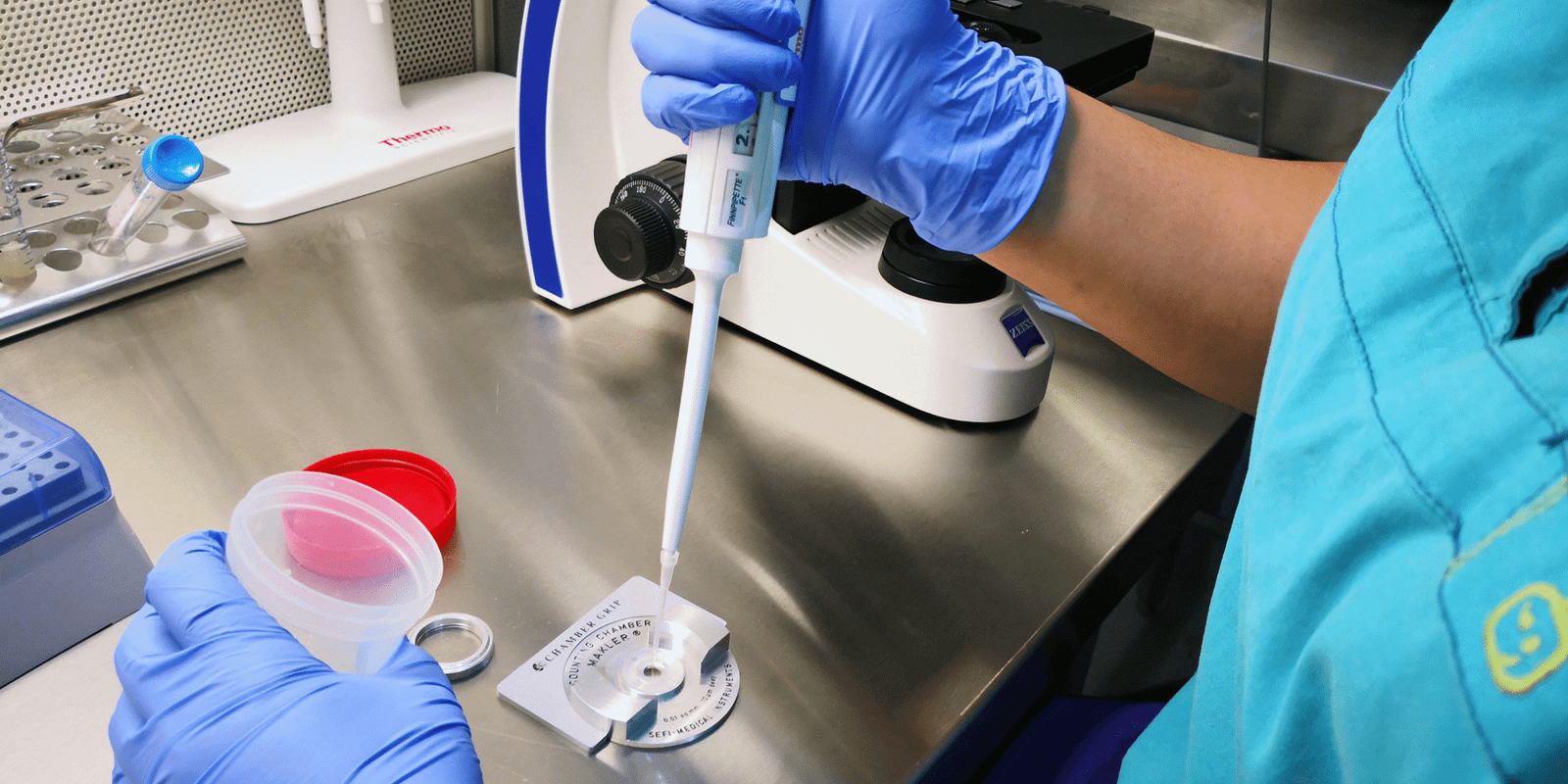
- Sample collection. The sample is produced by masturbation into a sterile container in a private room. Men who cannot ejaculate may need assisted or surgical retrieval.
- Analysis. Count, motility and morphology are checked.
- Freezing. The semen is mixed with a cryoprotectant, divided into labelled straws or vials, cooled slowly and stored in liquid nitrogen.
- Test thaw (often). A small portion may be thawed to check how well the sperm survive, which helps plan future treatment.
- Repeat samples. If time allows, two or three samples are collected a few days apart.
How successful is treatment with frozen sperm?
Freezing and thawing reduce sperm motility, and some sperm do not survive. The outcome depends mostly on the quality of the original sample and on the female partner’s age and fertility.
| Sample quality after thawing | Treatment usually advised |
|---|---|
| Good number of motile sperm | IUI may be possible |
| Moderate or low motile count | IVF or ICSI |
| Very few sperm (e.g. after cancer treatment or surgical retrieval) | ICSI, which needs only one sperm per egg |
Pregnancy rates with frozen sperm used in ICSI are broadly similar to those with fresh sperm.
Are there any risks or side effects?
Sperm freezing itself carries no physical risk for most men, as it only requires a semen sample. Points to be aware of:
- Not all sperm survive thawing, so a sample that is poor before freezing may be limited afterwards.
- Samples given after cancer treatment has started may have damaged DNA, so collection beforehand is strongly advised.
- Surgical sperm retrieval, if needed, can cause temporary scrotal soreness, swelling or, rarely, infection.
- Storage requires renewing consent and keeping contact details updated, as required by Indian ART regulations.
Aftercare
There is no recovery time after giving a sample; you can return to normal activities straight away. After surgical retrieval, wear supportive underwear, take simple pain relief and avoid heavy lifting for a few days. Keep a record of your storage details and renewal dates.
When you decide to use the stored sperm, contact the practice in advance. The number of straws thawed depends on the treatment planned and the quality seen at the test thaw, and any unused straws remain in storage for future attempts.
How much does sperm freezing cost?
Costs depend on the infection-screening tests, the number of samples frozen, semen analysis and processing, surgical retrieval if needed, and the length of storage (usually charged yearly). Later costs depend on which treatment, IUI, IVF or ICSI, the sperm is used for.
When to see a doctor
Seek advice as soon as cancer treatment is planned, ideally before the first dose; freezing can often be arranged within a day or two. Also see a specialist before a vasectomy if you might want children later, if a semen analysis shows a falling count, or if you have testicular pain, swelling or a lump.
Why choose Dr. Divya Venugopalan
Dr. Divya Venugopalan is a fertility specialist in Bengaluru with more than 14 years of experience, an MBBS from KIMS, a DNB in Obstetrics & Gynaecology and a Fellowship in Reproductive Medicine (FRM). She is a member of IFS and ISAR.
She can arrange sperm freezing quickly for men facing urgent treatment, explains consent and storage clearly, and plans future treatment for the couple together. Women can preserve fertility through egg freezing. Book a consultation at Thanisandra, Sahakar Nagar or HRBR Layout, or call +91 99459 26987.
Frequently Asked Questions
How is sperm frozen?
A semen sample is collected, analysed, mixed with a protective solution and stored in liquid nitrogen at –196 °C.
Does freezing affect sperm quality?
Some sperm do not survive thawing, but enough healthy sperm usually remain for IUI or ICSI. Babies born from frozen sperm are as healthy as those conceived naturally.
How many samples should be frozen?
Usually two or three samples, collected two to three days apart, to have enough sperm for more than one treatment attempt. If cancer treatment is urgent, even one sample is worthwhile.
How long can sperm be stored?
Frozen sperm can remain usable for many years. The permitted storage period and consent renewal are governed by the ART (Regulation) Act, 2021, which Dr. Divya will explain.
Can I freeze sperm after starting chemotherapy?
It is strongly advised to freeze sperm before chemotherapy or radiotherapy begins, because treatment can damage sperm DNA and reduce sperm production.
Medically reviewed by: Dr. Divya Venugopalan, MBBS, DNB (OBG), FRM, FMAS. Gynaecologist & fertility specialist, Bengaluru (KMC Reg. No. 91293). Last reviewed: 27 October 2026.
This page is for general information and does not replace a personal consultation. In an emergency, visit the nearest hospital emergency department.
Book a consultation with Dr. Divya → or call +91 99459 26987.