
Quick answer: After a failed IVF cycle, the next steps are to rest and recover, then have a structured review with your doctor: how your ovaries responded, egg and embryo quality, the transfer, and the uterus. Most failures are due to embryo chromosomal problems, but a review can reveal changes that improve the next attempt.
Key takeaways
- One failed cycle is common and does not mean IVF will not work for you.
- The most common reason for failure is a chromosomally abnormal embryo, which becomes more likely with age.
- A structured review covers stimulation, eggs, sperm, embryos, the transfer and the uterus.
- Further tests are chosen based on findings, not done routinely for everyone.
- Taking time to recover emotionally is a valid and important step.
Why do IVF cycles fail?
Most IVF cycles that fail do so because the embryo was not able to develop into a pregnancy, usually due to chromosomal errors. Even a good-looking embryo can be chromosomally abnormal, and this becomes more common as the woman’s age rises.
Other contributing factors include:
- Low number or quality of eggs, often linked to age or low ovarian reserve
- Sperm problems, including high DNA fragmentation
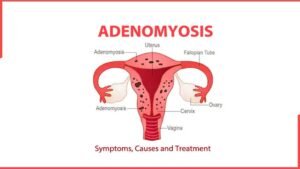
- Uterine factors such as polyps, fibroids distorting the cavity, adhesions or a thin lining
- Hydrosalpinx (a fluid-filled blocked tube), which can reduce implantation
- Thyroid problems, uncontrolled diabetes, smoking or a very high BMI
- Chance: even with the best embryo, implantation is never guaranteed
What should you do right after a negative result?
Give yourself time. Stop medicines only as your doctor advises, expect a period within a few days, and allow space to grieve. There is no need to rush into the next cycle.
- Talk openly with your partner, a trusted friend or a counsellor.
- Ask for a follow-up appointment, usually a few weeks later.
- Collect all your records: medicine doses, scan reports, egg and embryo details and the embryology report.
- Write down your questions before the review.
What should a failed IVF review include?
A thorough review looks at the whole cycle, step by step, to find anything that could be changed. A useful framework covers ten points:
- Diagnosis: was the original cause of infertility fully assessed?
- Ovarian reserve: did AMH and antral follicle count match the response?
- Protocol and doses: were they suited to you, and would a change help?
- Egg yield and maturity: how many eggs were collected and how many were mature?
- Fertilisation: was the rate normal, and was ICSI used when needed?
- Embryo development: how many reached the blastocyst stage, and what was their grading?
- Sperm: is a repeat semen analysis or DNA fragmentation test needed?
- Uterus: was the cavity checked, and was the lining adequate?
- Transfer: was it smooth, and was the timing correct?
- General health: thyroid, blood sugar, weight, vitamin D and lifestyle.
Which tests may help after IVF failure?
Tests should be chosen based on what the review suggests, rather than ordered for everyone. Common options include:
| Test | When it may help |
|---|---|
| Hysteroscopy | Suspected polyp, adhesions, septum or abnormal lining on scan |
| Repeat ultrasound or HSG | To check for fibroids or hydrosalpinx |
| Sperm DNA fragmentation | Poor embryo development or repeated failure |
| Karyotype of both partners | Repeated failure or recurrent miscarriage |
| Thyroid, blood sugar, vitamin D | If not recently checked |
| PGT-A | Selected cases, often older women with several embryos |
Some tests, such as endometrial receptivity testing or immune tests, are promoted widely but have limited evidence of benefit. Ask your doctor what difference a test would make to your plan before you agree to it.
What changes might be made for the next cycle?
Depending on the findings, changes may include:
- Adjusting the stimulation protocol or doses, for example switching between antagonist and agonist protocols
- Using ICSI if fertilisation was low
- Treating a polyp, fibroid or hydrosalpinx before the next transfer
- Choosing a frozen embryo transfer rather than a fresh one
- Considering PGT-A genetic testing in selected cases
- Improving health in the months before the next cycle, as described in our 90-day pre-IVF plan
If you still have frozen embryos, the next step may simply be a frozen transfer, without repeating stimulation.
Should you change your doctor or clinic?
Changing is not always necessary. A clinic that knows your history and offers a clear, honest review may be the best place to continue. A second opinion is reasonable if:
- You did not receive a clear explanation of what happened
- The same plan is suggested again without any changes
- You have had two or more failed transfers of good-quality embryos
- You feel your questions are not being answered
After three or more failed transfers of good embryos, an evaluation for recurrent implantation failure is appropriate.
When to see a gynaecologist
Contact a doctor promptly if, after an IVF cycle, you have:
- Severe abdominal pain or swelling, breathlessness or reduced urine (possible OHSS)
- Heavy bleeding, fainting or one-sided pain with a positive pregnancy test (possible ectopic pregnancy)
- Fever or foul-smelling discharge
- Persistent low mood, anxiety or difficulty coping
How Dr. Divya Venugopalan can help
Dr. Divya Venugopalan, a fertility specialist with a Fellowship in Reproductive Medicine (FRM) and a Fellowship in Minimal Access Surgery (FMAS), offers a detailed, unhurried review of previous IVF cycles, including those done elsewhere. She explains what the records show and what can realistically change.
Where needed, she can perform hysteroscopy or laparoscopy to treat problems in the uterus or tubes, and evaluate for recurrent implantation failure before planning the next IVF cycle.
Book a review consultation at Thanisandra, Sahakar Nagar or HRBR Layout, or call +91 99459 26987.
Frequently asked questions
How long should I wait before trying IVF again?
Many women can start another cycle after one or two normal periods. Some prefer a longer break to recover emotionally, which is perfectly reasonable. A frozen embryo transfer can often be planned sooner.
Does one failed IVF cycle mean the next will fail too?
No. Many couples succeed in a second or third attempt. The first cycle also gives useful information about how your body responds, which helps refine the next plan.
Is it my fault that IVF failed?
Almost never. Most failures are due to embryo chromosomal problems that no one can control. Work, mild stress or normal daily activity after transfer do not cause IVF failure.
What is recurrent implantation failure?
It usually describes failure to achieve pregnancy after transferring several good-quality embryos, often three or more. It calls for a structured evaluation of the embryos, the uterus and general health.
Should I ask for every possible test after a failed cycle?
Not necessarily. Tests should be chosen based on your history and cycle findings. Some widely advertised tests have limited evidence and may add cost without improving your chances.
Medically reviewed by: Dr. Divya Venugopalan, MBBS, DNB (OBG), FRM, FMAS. Gynaecologist & fertility specialist, Bengaluru (KMC Reg. No. 91293). Last reviewed: 27 October 2026.
This article is for general information and does not replace a personal consultation. In an emergency, visit the nearest hospital emergency department.