Key takeaways
- Age 35 is not a cliff edge: risks rise gradually, and your overall health matters as much as your age.
- If you are 35 or older, see a doctor if you have not conceived after 6 months of trying.
- Screening for chromosomal conditions (combined test, NIPT) is offered early; diagnostic tests are an option, not a requirement.
- Pre-pregnancy checks for blood pressure, sugar, thyroid and weight make a real difference.
- Many women over 35 have a normal vaginal birth.
Is pregnancy after 35 high-risk?
Doctors sometimes label it “advanced maternal age”, and it may be grouped with high-risk pregnancies, but this does not mean you will have complications. It means some checks are offered earlier or more often.
Your personal risk depends on your age together with your medical history, weight, previous pregnancies and whether you conceived naturally or with fertility treatment. A healthy 37-year-old may have fewer risks than a younger woman with uncontrolled diabetes. Read more in our guide to high-risk pregnancy management.
What are the risks of pregnancy after 35?
The main risks increase slowly through the late thirties and more noticeably after 40.
| Risk | What changes with age | How it is managed |
|---|---|---|
| Taking longer to conceive | Egg number and quality decline, especially after 35 | Early fertility evaluation after 6 months of trying |
| Miscarriage | Rises from roughly 1 in 10 in the twenties to about 1 in 5 in the late thirties | Early scan, support, investigation after repeated losses |
| Chromosomal conditions | Down syndrome risk at birth is about 1 in 350 at 35 and about 1 in 100 at 40 | Combined screening, NIPT, diagnostic testing if needed |
| Gestational diabetes | More common with age and higher weight | Early and 24–28 week glucose testing, diet, medicines if needed |
| High blood pressure and pre-eclampsia | More common, especially in a first pregnancy or after IVF | Risk screening at 11–14 weeks, aspirin if high risk |
| Placenta problems and stillbirth | Small increase, mainly after 40 | Growth scans, discussing birth around 39–40 weeks |
Twins are also more common after 35 and after fertility treatment, which brings its own monitoring needs.
How should I prepare for pregnancy after 35?
A pre-pregnancy visit three to six months before trying is the single most useful step.
- Start folic acid at least one month before conception and continue to 12 weeks.
- Check blood pressure, blood sugar, thyroid and haemoglobin, and treat anything abnormal.
- Review medicines, as some need to be changed before pregnancy.
- Aim for a healthy weight, regular activity, and no smoking or alcohol.
- Check rubella immunity and other vaccines.
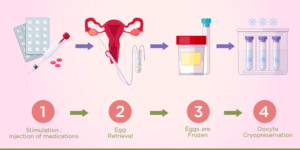
- Assess fertility with an AMH test and an ultrasound antral follicle count if you have concerns, and discuss egg freezing if you plan to delay further.
What tests are offered in pregnancy after 35?
You are offered the same tests as every pregnant woman, with some recommended earlier or more strongly.
Screening tests (no risk to the baby)
- First-trimester combined screening at 11–14 weeks: NT scan plus blood tests, giving a risk estimate for Down syndrome and some other conditions.
- NIPT (cell-free DNA test) from 10 weeks: a blood test that is highly accurate for Down syndrome, though a positive result still needs confirmation.
- Detailed anomaly scan at 18–22 weeks.
Diagnostic tests (give a definite answer)
Chorionic villus sampling (11–14 weeks) or amniocentesis (from 15 weeks) is offered if screening shows a high risk. They carry a small risk of miscarriage, generally quoted as under 1 in 200. The choice to have them is yours.
Will I need a caesarean if I am over 35?
No, age alone is not a reason for a caesarean. Caesarean rates are higher in older mothers, mainly because of other complications, but many women over 35 have a normal birth.
Because the risk of stillbirth rises slightly towards and beyond the due date after 40, your doctor may discuss induction of labour around 39–40 weeks if you are 40 or older.
When to see a gynaecologist
See a gynaecologist if you are 35 or older and have not conceived after 6 months of trying (or straight away if you are over 40). During pregnancy, seek urgent care for:
- Vaginal bleeding or severe abdominal pain
- Severe headache, blurred vision or sudden swelling
- Reduced baby movements after 28 weeks
- Leaking fluid or regular contractions before 37 weeks
- Excessive thirst and passing urine very often
How Dr. Divya Venugopalan can help
Dr. Divya Venugopalan is an obstetrician and fertility specialist in North Bengaluru with more than 14 years of experience. Her Fellowship in Reproductive Medicine (FRM) means she can guide you from fertility assessment, ovulation induction or IVF through to pregnancy care.
She offers pre-pregnancy counselling, early screening and a clear monitoring plan as part of her high-risk pregnancy care, explaining each test so you can make informed choices.
She consults at Thanisandra, Sahakar Nagar and HRBR Layout. Book an appointment or call +91 99459 26987.
Frequently asked questions
How long should I try to conceive after 35 before seeing a doctor?
See a doctor after 6 months of regular unprotected sex without pregnancy. If you are over 40, or have irregular periods or known problems, seek advice before you start trying.
Is NIPT better than the NT scan and double marker test?
NIPT detects Down syndrome more accurately than combined screening, but it does not replace the NT scan, which can also show structural problems. Many women have both, and any positive NIPT result needs a diagnostic test to confirm it.
Can I have a normal delivery after 35?
Yes. Age alone is not a reason for a caesarean. The mode of delivery depends on your health, your baby’s position and growth, and how labour progresses.
Should I take aspirin in pregnancy after 35?
Not routinely. Aspirin is advised if your combined risk factors, such as age over 40, first pregnancy, IVF, obesity or high blood pressure, put you at high risk of pre-eclampsia. Your doctor will assess this at 11–14 weeks.
Does a first pregnancy after 35 carry more risk than a second?
A first pregnancy carries a slightly higher risk of pre-eclampsia and longer labour at any age. Your doctor will consider this alongside your age and health when planning your care.
Medically reviewed by: Dr. Divya Venugopalan, MBBS, DNB (OBG), FRM, FMAS. Gynaecologist & fertility specialist, Bengaluru (KMC Reg. No. 91293). Last reviewed: 27 October 2026.
This article is for general information and does not replace a personal consultation. In an emergency, visit the nearest hospital emergency department.