
Quick answer: Heavy periods are bleeding that soaks through a pad or tampon every one to two hours, lasts more than seven days, or affects your daily life. Common causes are fibroids, polyps, adenomyosis, hormonal imbalance and bleeding disorders. Treatment ranges from tranexamic acid and the hormonal IUD to minimally invasive surgery.
Key takeaways
- Heavy menstrual bleeding is defined by its effect on your life, not only by the amount of blood lost.
- Fibroids, adenomyosis, polyps and hormonal imbalance are the most common causes.
- A blood count and ferritin test check for anaemia, which is common and easily missed.
- Non-hormonal tablets and the hormonal IUD control bleeding for most women without surgery.
- Heavy bleeding with dizziness or fainting is an emergency.
How do you know if your periods are too heavy?
Your periods are likely too heavy if bleeding disrupts work, sleep or social life. Doctors describe it as heavy menstrual bleeding (menorrhagia).
- Soaking through a pad or tampon every one to two hours for several hours.
- Needing double protection or waking at night to change.
- Passing clots larger than about 2.5 cm (a large coin).
- Bleeding for more than seven days.
- Feeling tired, breathless or dizzy, which can signal anaemia.
Heavy bleeding is one of several period problems; our complete guide to period issues covers the others.
What causes heavy periods?
Heavy periods usually come from a change in the uterus, a hormone imbalance, or a problem with blood clotting. Doctors use the PALM-COEIN system to sort the causes, explained in our article on abnormal uterine bleeding.
Structural causes
- Fibroids: especially those bulging into the uterine cavity.
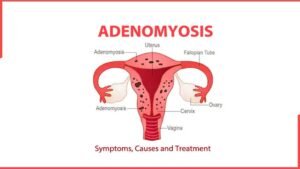
- Adenomyosis: a bulky, tender uterus with heavy and painful periods, common in the late 30s and 40s.
- Polyps: small growths of the lining that also cause spotting.
- Endometrial hyperplasia or, rarely, cancer: more likely over 45, with obesity, or after long gaps between periods.
Non-structural causes
- Irregular ovulation: in PCOS, perimenopause or the teenage years, the lining builds up and then sheds heavily.
- Thyroid disorders: an underactive thyroid can make periods heavier.
- Bleeding disorders: such as von Willebrand disease, often suspected when heavy periods start at the very first period.
- Medicines and devices: blood thinners and the copper IUD.
How do heavy periods affect your health and relationships?
Heavy periods do more than cause inconvenience. Regular heavy blood loss is a leading cause of iron-deficiency anaemia in women, leading to tiredness, hair fall, poor concentration and breathlessness.
Many women also quietly withdraw from exercise, travel and intimacy. Fear of leaking, prolonged bleeding and fatigue can lower sex drive and strain relationships. These effects are real and are a good reason to seek treatment rather than waiting.
How are heavy periods diagnosed?
- History: how long and how heavy your periods are, clots, pain, and whether heavy bleeding started from your first period.
- Blood tests: complete blood count and ferritin, thyroid function, and clotting tests if a bleeding disorder is suspected.
- Pregnancy test where relevant.
- Transvaginal ultrasound: to look for fibroids, polyps, adenomyosis and the thickness of the lining.
- Hysteroscopy or endometrial biopsy: for persistent bleeding, a suspected polyp, or women over 45 or with risk factors.
What are the treatment options for heavy periods?
Treatment depends on the cause, your age, and whether you want children in the future. Most women improve with medicines or the hormonal IUD.
Medicines
- Tranexamic acid: a non-hormonal tablet taken only on heavy days that helps blood clot in the uterus. It can reduce blood loss by roughly a third to a half.
- Anti-inflammatory painkillers: such as mefenamic acid, which reduce both pain and bleeding.
- Hormonal options: combined pills, progestogen tablets or injections.
- Iron supplements: oral or intravenous iron to correct anaemia.
Hormonal IUD vs tranexamic acid
These are two of the most commonly used first-line treatments. The table compares them.
| Feature | Levonorgestrel hormonal IUD | Tranexamic acid |
|---|---|---|
| How it works | Thins the uterine lining locally | Helps blood clot in the uterus |
| How you take it | Inserted once, lasts several years | Tablets only during heavy days |
| Effect on bleeding | Large reduction; some women stop bleeding altogether | Moderate reduction |
| Contraception | Yes | No |
| Effect on fertility | Returns soon after removal | None; can be used while trying to conceive |
| Common side effects | Irregular spotting in the first months | Mild stomach upset; not suitable with a history of clots |
Procedures and surgery
- Hysteroscopic removal of polyps or fibroids inside the cavity, without any cut on the abdomen.
- Laparoscopic myomectomy to remove larger fibroids while keeping the uterus.
- Endometrial ablation to destroy the lining in women who have completed their family.
- Hysterectomy as a last option when other treatments have not worked.
When to see a gynaecologist
- Bleeding that soaks through protection every hour for several hours (seek emergency care).
- Dizziness, fainting, a racing heart or breathlessness.
- Heavy periods that last more than seven days or are getting worse.
- Bleeding between periods, after sex or after menopause.
- Heavy periods since your first period, or easy bruising and nosebleeds.
How Dr. Divya Venugopalan can help
Dr. Divya Venugopalan, gynaecologist in North Bengaluru, assesses heavy periods with a careful history, blood tests and ultrasound, then explains each treatment option clearly, including non-surgical choices.
Learn more about her heavy menstrual bleeding care. When surgery is needed, her FMAS training in minimal access surgery allows her to offer hysteroscopy and laparoscopy for polyps and fibroids, with the aim of preserving the uterus where possible.
Book an appointment at Thanisandra, Sahakar Nagar or HRBR Layout, or call +91 99459 26987.
Frequently asked questions
When does a heavy period become an emergency?
Go to an emergency department if you soak a pad every hour for more than two hours, pass very large clots, or feel faint, dizzy or breathless. These can signal dangerous blood loss.
Can heavy periods be treated without surgery?
Yes. Most women improve with tranexamic acid, anti-inflammatory painkillers, hormonal tablets or the hormonal IUD. Surgery is usually needed only for specific problems such as large fibroids or polyps.
Will heavy periods affect my ability to get pregnant?
Heavy bleeding itself does not stop pregnancy, but causes such as fibroids inside the cavity, polyps or adenomyosis can affect fertility. Treating the cause often improves the chances of conceiving.
Are blood clots during periods normal?
Small clots on heavy days are common. Clots larger than a large coin, or clots every period, suggest heavy menstrual bleeding and should be checked.
Does heavy bleeding mean cancer?
Usually not. Most heavy periods are caused by benign conditions. The risk of cancer is higher over 45, with obesity, or with bleeding between periods or after menopause, so these situations need prompt assessment.
Medically reviewed by: Dr. Divya Venugopalan, MBBS, DNB (OBG), FRM, FMAS. Gynaecologist & fertility specialist, Bengaluru (KMC Reg. No. 91293). Last reviewed: 27 October 2026.
This article is for general information and does not replace a personal consultation. In an emergency, visit the nearest hospital emergency department.