Quick answer: Yes, many women with adenomyosis get pregnant, but the condition can lower implantation rates and slightly increase the risk of miscarriage and some pregnancy complications. Fertility treatment is tailored: some women conceive naturally, while others benefit from IVF with GnRH agonist pre-treatment and frozen embryo transfer. Early review by a fertility specialist helps.
Key takeaways
- Adenomyosis does not mean infertility; many women conceive naturally.
- It can affect fertility through inflammation, altered uterine contractions and a less receptive lining.
- Age and ovarian reserve remain the most important factors for pregnancy success.
- In IVF, suppressing adenomyosis with a GnRH agonist before a frozen embryo transfer may improve outcomes in selected women.
- Pregnancy with adenomyosis may need closer monitoring for miscarriage, preterm birth and pre-eclampsia.
Does adenomyosis cause infertility?
Adenomyosis is linked with reduced fertility, but it does not make pregnancy impossible. Studies of women having IVF show lower implantation and higher miscarriage rates in those with adenomyosis, especially with diffuse or severe disease.
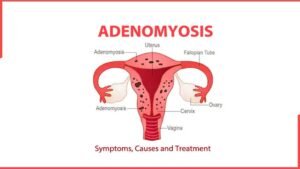
Because adenomyosis often coexists with endometriosis, fibroids or age-related decline in egg quality, it can be hard to separate its effect from these other factors. A full fertility assessment looks at all of them. For a general introduction to the condition, see adenomyosis symptoms and treatment.
How does adenomyosis affect implantation?
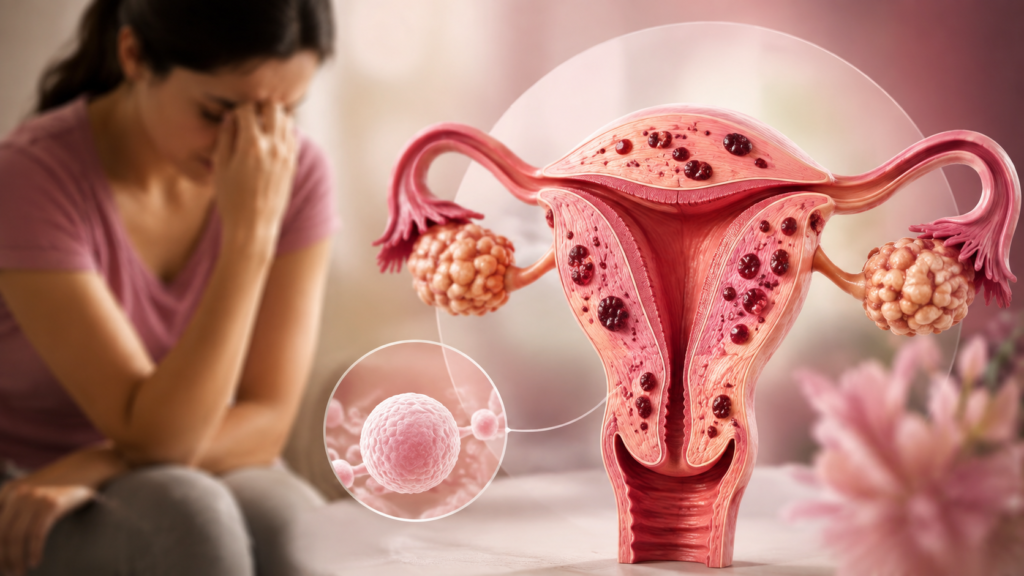
Adenomyosis changes the environment of the uterus in ways that can make it harder for an embryo to attach and grow.
- Inflammation: raised inflammatory signals and free radicals in the uterus.
- Abnormal uterine contractions: the junction between lining and muscle is disrupted, which may affect sperm transport and embryo positioning.
- Reduced receptivity: progesterone resistance and altered gene expression can make the lining less receptive.
- Structural change: a bulky, distorted uterus may affect blood flow to the lining.
The hormonal basis of these changes is explained in hormones and adenomyosis progression.
Can I get pregnant naturally with adenomyosis?
Many women with mild adenomyosis conceive naturally, especially when they are younger and have good ovarian reserve and open tubes.
Try naturally for up to 12 months if you are under 35, or 6 months if you are 35 or older, before seeking help. If you already have severe symptoms, other fertility issues or are over 35, it is sensible to see a fertility specialist earlier. Hormonal treatments such as the pill or hormonal IUS prevent pregnancy, so they are stopped when you are trying.
What fertility treatments help women with adenomyosis?
Treatment depends on your age, ovarian reserve, sperm quality, tubal status and the severity of adenomyosis.
| Approach | When it is considered | Key points |
|---|---|---|
| Timed intercourse or ovulation induction | Younger women, mild disease, normal tubes | Simple first step; pain relief can continue |
| IUI | Mild disease with mild male factor or unexplained delay | Limited number of cycles before moving on |
| IVF or ICSI with fresh transfer | Standard IVF indications | May be less successful with significant adenomyosis |
| IVF with GnRH agonist pre-treatment and frozen embryo transfer | Moderate to severe adenomyosis or previous failed transfers | Embryos are frozen; uterus is suppressed for 2–3 months before transfer |
| Adenomyomectomy before conception | Large focal adenomyoma distorting the uterus | Selected cases only; pregnancy needs specialist monitoring |
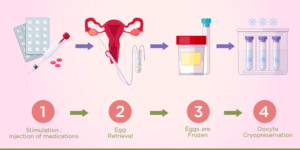
This “freeze-all and suppress” strategy aims to shrink the uterus and calm inflammation before the embryo goes in. If several good embryos have not implanted, read about recurrent implantation failure. Unexplained IVF failure may also point to hidden endometriosis; see silent endometriosis and unexplained infertility.
Does adenomyosis increase the risk of miscarriage or pregnancy complications?
Adenomyosis is associated with a higher risk of miscarriage and some complications later in pregnancy, although most pregnancies go well.
Reported risks include early miscarriage, preterm birth, pre-eclampsia, a baby that is small for dates, and placental problems. Women who have had adenomyomectomy have a small risk of uterine rupture and usually need a planned caesarean delivery. These pregnancies benefit from closer antenatal monitoring.
Should I freeze my eggs if I have adenomyosis?
Egg freezing may be worth discussing if you want children later and are in your mid-30s or older, or if coexisting endometriosis has affected your ovaries.
Adenomyosis itself does not usually damage eggs, but age does. An AMH blood test and antral follicle count help estimate your ovarian reserve and guide the decision.
When to see a gynaecologist
See a fertility specialist or gynaecologist if:
- You have not conceived after 12 months of trying (6 months if you are 35 or older)
- You have had two or more miscarriages
- Good-quality embryos have repeatedly failed to implant in IVF
- Painful, heavy periods are getting worse while you are trying to conceive
- You have adenomyosis and are planning pregnancy, to make a plan in advance
In pregnancy, seek urgent care for heavy bleeding, severe abdominal pain or reduced fetal movements.
How Dr. Divya Venugopalan can help
Dr. Divya Venugopalan is a fertility specialist with a Fellowship in Reproductive Medicine (FRM). She assesses the whole picture, including ovarian reserve, tubes, sperm and uterine factors, before recommending treatment such as ovulation induction, IUI or IVF.
For women with adenomyosis she plans uterine preparation carefully, including suppression before frozen embryo transfer where suitable. Her FMAS training means surgical options are considered when they genuinely help. If you have had repeated losses, her recurrent pregnancy loss evaluation may also be relevant.
Book a fertility consultation at Thanisandra, Sahakar Nagar or HRBR Layout.
Frequently asked questions
Can I have a normal pregnancy with adenomyosis?
Yes, many women with adenomyosis have healthy pregnancies and babies. Your doctor may recommend closer monitoring for miscarriage, preterm birth and blood pressure problems.
Does IVF work with adenomyosis?
IVF can be successful with adenomyosis, although success rates may be lower than average. Strategies such as GnRH agonist pre-treatment before frozen embryo transfer may help in selected women.
Should adenomyosis be treated before trying to conceive?
Not always. Mild adenomyosis may need no treatment beforehand, while moderate to severe disease may benefit from suppression before embryo transfer. The decision depends on your age and overall fertility.
Does surgery for adenomyosis improve fertility?
Surgery is considered only for selected women, usually with a large focal adenomyoma. It can carry risks in future pregnancy, including uterine rupture, so it needs careful discussion.
Does adenomyosis get better during pregnancy?
Symptoms often ease during pregnancy because periods stop and progesterone is high. They frequently return after delivery and breastfeeding.
Medically reviewed by: Dr. Divya Venugopalan, MBBS, DNB (OBG), FRM, FMAS. Gynaecologist & fertility specialist, Bengaluru (KMC Reg. No. 91293). Last reviewed: 27 October 2026.
This article is for general information and does not replace a personal consultation. In an emergency, visit the nearest hospital emergency department.