Key takeaways
- Pelvic floor weakness after childbirth is common after both vaginal and caesarean births, but it is not something you simply have to live with.
- Daily pelvic floor exercises are the first and most effective treatment for leaking urine.
- Return to high-impact exercise such as running gradually, usually not before about 12 weeks.
- A tummy gap (diastasis recti) is normal after pregnancy and usually narrows with time and the right exercises.
- Persistent leaking, heaviness, pain or low mood deserve a check-up, not silence.
What happens to the pelvic floor after childbirth?
The pelvic floor is a hammock of muscles that supports the bladder, uterus and bowel and helps control urine, wind and stools. Pregnancy hormones, the weight of the baby and the stretching of a vaginal birth all weaken and stretch it.
After birth, many women notice:
- Leaking urine when coughing, sneezing, laughing or lifting (stress incontinence)
- A sudden urge to pass urine
- Difficulty controlling wind
- A feeling of heaviness or a bulge in the vagina (possible prolapse)
- Pain or discomfort during sex
- Lower back ache and a soft tummy with a central gap
Risk is higher after a long second stage of labour, a forceps or vacuum delivery, a large baby or a third- or fourth-degree tear. A caesarean protects the pelvic floor partly, but not completely, because pregnancy itself places strain on it.
When can I start pelvic floor exercises after delivery?
Most women can start gentle pelvic floor exercises within the first few days after a vaginal birth, once passing urine is comfortable and any catheter has been removed. After a caesarean, you can start as soon as you feel able.
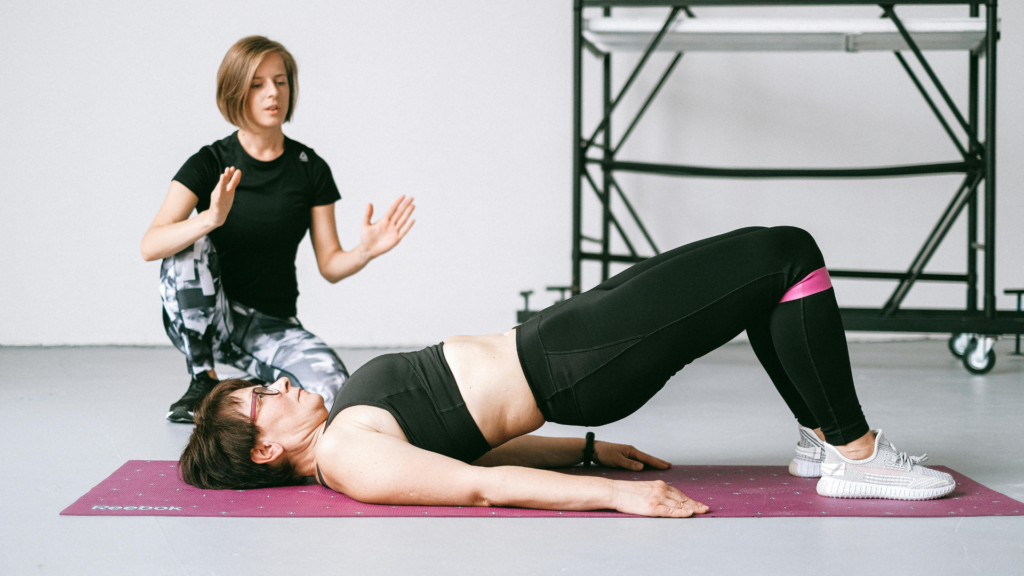
How to do pelvic floor exercises
- Sit or lie comfortably and relax your tummy, thighs and buttocks.
- Squeeze and lift as if stopping the flow of urine and holding in wind at the same time.
- Slow holds: hold for up to 10 seconds, then relax fully for the same time. Repeat up to 10 times.
- Quick squeezes: squeeze and release quickly 10 times.
- Do this three times a day. Start with what you can manage and build up.
Do not practise by stopping your urine flow regularly, as this can interfere with bladder emptying. Improvement usually takes six to twelve weeks of regular practice, and the exercises are worth continuing for life.
What does a recovery timeline look like?
Every woman recovers at her own pace, but this is a general guide for an uncomplicated birth.
| Time after birth | Focus |
|---|---|
| First 2 weeks | Rest, gentle pelvic floor squeezes, deep breathing, short walks, avoid constipation and heavy lifting |
| 2–6 weeks | Longer walks, build up pelvic floor holds, gentle tummy (deep core) exercises |
| 6–8 weeks | Postnatal check-up; low-impact exercise such as swimming (once bleeding stops), yoga or cycling if comfortable |
| 12 weeks onwards | Gradual return to running, jumping and heavier weights if there are no symptoms of leaking or heaviness |
Recovery after a caesarean, a significant tear or an assisted delivery may take longer.
What is diastasis recti and how is it treated?
Diastasis recti is a widening of the gap between the two vertical tummy muscles. It is present in most women by the end of pregnancy and often narrows on its own in the first eight weeks.
You can check by lying on your back with knees bent, lifting your head slightly and feeling for a gap above and below the belly button. A gap wider than about two finger-widths, or a bulge along the middle, is worth discussing. Treatment involves guided deep core exercises, avoiding straining, and good posture when lifting the baby. Surgery is needed only rarely, for a large gap that does not improve after a year or more.
What treatments help if symptoms do not improve?
Most pelvic floor problems improve with exercises, but help is available if they do not.
- Pelvic floor physiotherapy: a specialist can check that you are doing the exercises correctly and design a programme for you.
- Biofeedback or electrical stimulation for women who struggle to find the right muscles.
- Treatment of vaginal dryness while breastfeeding, which can make sex painful.
- Vaginal pessary for prolapse symptoms.
- Surgery for persistent incontinence or prolapse, usually only after you have finished having children.
Do not forget your emotional health
Physical symptoms such as leaking can affect confidence and mood. Low mood, anxiety or loss of interest that lasts more than two weeks after birth may be postnatal depression, which is common and treatable. Mention it at your postnatal visit.
When to see a gynaecologist
See a gynaecologist after childbirth if you have:
- Leaking urine or stools that is not improving by six to twelve weeks
- A bulge, heaviness or dragging feeling in the vagina
- Pain during sex beyond the first few months
- Heavy bleeding, foul-smelling discharge or fever (seek urgent care)
- Pain, redness or opening of a perineal or caesarean wound
- Persistent low mood or thoughts of harming yourself (seek help immediately)
How Dr. Divya Venugopalan can help
Dr. Divya Venugopalan is an obstetrician and gynaecologist in North Bengaluru with more than 14 years of experience, a DNB in Obstetrics & Gynaecology and a Fellowship in Minimal Access Surgery (FMAS). She sees women after childbirth for postnatal check-ups, pelvic floor assessment, wound healing, contraception and mood.
She can examine for prolapse and diastasis, guide your exercise plan, and arrange pelvic floor physiotherapy when needed, as part of her gynaecology care. For women who have completed their family, she can discuss permanent contraception such as tubal ligation, and she continues to support pelvic health through to menopause.
She consults at Thanisandra, Sahakar Nagar and HRBR Layout. Book a postnatal check-up or call +91 99459 26987.
Frequently asked questions
Is leaking urine normal after giving birth?
It is common, affecting roughly one in three women after childbirth, but it is not something you have to accept. Pelvic floor exercises cure or improve it for most women within a few months.
Does a caesarean protect the pelvic floor?
Partly. Pregnancy itself stretches and loads the pelvic floor, so women who had a caesarean can also have weakness or leaking and benefit from the same exercises.
When can I start running after delivery?
Most guidance suggests waiting until about 12 weeks after birth, and only if you can walk briskly and do low-impact exercise without leaking, heaviness or pain. Build up gradually.
How long does pelvic floor recovery take after birth?
Most women notice improvement within six to twelve weeks of regular exercises, and recovery continues for up to six months or longer. Recovery after a significant tear or assisted birth may take more time.
When can I resume sex after childbirth?
When bleeding has stopped, any stitches have healed and you feel ready, often around six weeks. Use a lubricant if you are breastfeeding, and plan contraception, because you can become pregnant before your periods return.
Medically reviewed by: Dr. Divya Venugopalan, MBBS, DNB (OBG), FRM, FMAS. Gynaecologist & fertility specialist, Bengaluru (KMC Reg. No. 91293). Last reviewed: 27 October 2026.
This article is for general information and does not replace a personal consultation. In an emergency, visit the nearest hospital emergency department.