Quick answer: Adenomyosis causes heavy bleeding because tissue trapped in the uterine muscle enlarges the uterus, increases the bleeding surface and stops the muscle from contracting efficiently. Bleeding that soaks a pad every one to two hours, lasts over seven days or causes anaemia needs assessment. Tranexamic acid, the hormonal IUS and other treatments can reduce blood loss significantly.
Key takeaways
- Heavy menstrual bleeding is one of the most common symptoms of adenomyosis.
- Flooding, clots larger than a coin, double protection and periods over seven days are signs that bleeding is too heavy.
- Untreated heavy bleeding often leads to iron deficiency anaemia, causing tiredness and breathlessness.
- Treatment works in steps: iron replacement, bleeding-reducing medicines, the hormonal IUS, and procedures if needed.
- Very heavy bleeding with dizziness or fainting is an emergency.
Why does adenomyosis cause heavy bleeding?
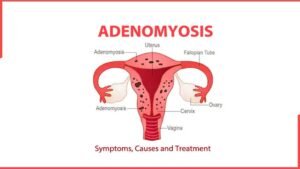
Adenomyosis makes periods heavy because the uterine wall is thickened and the muscle cannot squeeze down normally to control bleeding.
- Larger uterus: an enlarged cavity means a bigger lining surface to shed.
- Poor muscle contraction: tissue embedded in the muscle interferes with the contractions that normally close off blood vessels.
- More blood vessels: adenomyosis is associated with increased vessel growth in the uterine wall.
- Inflammation: prostaglandins and other inflammatory chemicals increase flow and cramping.
- Associated conditions: fibroids or polyps can coexist and add to bleeding.
Hormonal changes also matter, which is why bleeding often worsens in the 40s; see hormones and adenomyosis progression. For the full picture of the condition, read adenomyosis symptoms and treatment.
How do I know if my periods are too heavy?
Heavy menstrual bleeding is defined as blood loss that interferes with your physical, social or emotional life. You do not need to measure it exactly; patterns matter more.
- Soaking through a pad or tampon every one to two hours for several hours
- Needing to use two pads together, or change at night
- Passing clots larger than a ₹5 coin
- Periods lasting longer than seven days
- Bleeding through clothes or bedding, or avoiding going out on heavy days
- Feeling exhausted, breathless or dizzy during or after periods
Keeping a simple diary of pad changes, clots and days of bleeding for two or three cycles helps your doctor judge severity and track the effect of treatment.
Can heavy bleeding from adenomyosis cause anaemia?
Yes. Losing more iron each month than your diet replaces gradually leads to iron deficiency and then anaemia.
Symptoms include tiredness, weakness, pale skin, breathlessness on climbing stairs, palpitations, hair fall, brittle nails and poor concentration. Iron deficiency is common among women in India even without heavy periods, so heavy bleeding adds to the risk.
Treatment includes iron tablets, and intravenous iron when levels are very low or tablets are not tolerated. Correcting anaemia before any surgery is important. Diet helps but cannot usually keep up with ongoing heavy loss on its own.
What tests are needed for heavy bleeding with adenomyosis?
Your doctor will confirm the cause and check its effect on your health.
- Blood tests: complete blood count and ferritin (iron stores); thyroid function and clotting tests when indicated.
- Transvaginal ultrasound: to confirm adenomyosis and look for fibroids or polyps.
- MRI: in complex cases or before surgery.
- Hysteroscopy or endometrial sampling: if bleeding is irregular, you are over 45, or there are risk factors for lining problems.
How is heavy bleeding from adenomyosis treated?
Treatment is stepwise, starting with medicines and moving to procedures only if needed. Fertility plans shape the choice at each step.
| Step | Options | Notes |
|---|---|---|
| Correct anaemia | Iron tablets or intravenous iron | Needed alongside any other treatment |
| Medicines on heavy days | Tranexamic acid, NSAIDs | Non-hormonal; suitable when trying to conceive |
| Hormonal control | LNG-IUS, dienogest, continuous combined pill | LNG-IUS often greatly reduces flow |
| Short-term suppression | GnRH analogues with add-back therapy | Useful to stop bleeding and raise haemoglobin before surgery |
| Procedures | Uterine artery embolisation, ablation, adenomyomectomy | Selected women; not all preserve fertility |
| Definitive | Laparoscopic hysterectomy | When family is complete and other options fail |
Each option is discussed in more depth in adenomyosis treatment options.
What can I do at home on heavy days?
Simple measures help you cope while treatment takes effect.
- Take prescribed tranexamic acid or NSAIDs from the first heavy day, as directed.
- Drink plenty of fluids and eat iron-rich foods such as green leafy vegetables, pulses, jaggery in moderation, eggs, fish or meat, with vitamin C to help absorption.
- Use a heat pack for cramps.
- Plan rest on your heaviest days and keep a period diary.
When to see a gynaecologist
See a gynaecologist if heavy periods affect your daily life or you have any of these:
- Soaking a pad every hour for more than two hours
- Bleeding for longer than seven days
- Symptoms of anaemia: fatigue, breathlessness, palpitations
- Bleeding between periods or after sex
- Any bleeding after menopause
Go to an emergency department if you feel faint, have a racing heart, chest pain or very heavy bleeding that will not slow down.
How Dr. Divya Venugopalan can help
Dr. Divya Venugopalan assesses heavy bleeding thoroughly, checking for anaemia and identifying adenomyosis, fibroids or polyps, then builds a step-by-step plan. Learn more about her care for heavy menstrual bleeding and adenomyosis.
With FMAS training she offers hysteroscopy and laparoscopic surgery when medicines are not enough, and with her FRM she makes sure treatment respects your plans for pregnancy.
Book an appointment or call +91 99459 26987.
Frequently asked questions
How much bleeding is too much with adenomyosis?
Changing a pad every one to two hours, passing large clots, bleeding over seven days or feeling tired and breathless are signs of heavy bleeding. If bleeding disrupts your life, it is worth treating.
Does tranexamic acid work for adenomyosis bleeding?
Yes, it can reduce menstrual blood loss substantially when taken on heavy days. It is non-hormonal but is not suitable for women with a history of blood clots.
Will the hormonal IUS stop my periods?
The hormonal IUS usually makes periods much lighter and some women stop bleeding altogether. Irregular spotting is common in the first three to six months.
Can heavy bleeding from adenomyosis be dangerous?
It can cause significant anaemia, and rarely very heavy bleeding needs emergency care. Timely treatment prevents most complications.
Will heavy periods stop after menopause?
Yes, periods stop after menopause and adenomyosis usually settles. Bleeding in the years leading up to menopause can be heavier, so treatment may still be needed.
Medically reviewed by: Dr. Divya Venugopalan, MBBS, DNB (OBG), FRM, FMAS. Gynaecologist & fertility specialist, Bengaluru (KMC Reg. No. 91293). Last reviewed: 27 October 2026.
This article is for general information and does not replace a personal consultation. In an emergency, visit the nearest hospital emergency department.