Quick answer: Adenomyosis treatment options include non-hormonal medicines (NSAIDs, tranexamic acid), hormonal treatment (the levonorgestrel IUS, dienogest, the combined pill, GnRH analogues), uterus-sparing procedures (uterine artery embolisation, focused ultrasound, adenomyomectomy) and hysterectomy. The right choice depends on symptom severity, age and whether you still want to become pregnant.
Key takeaways
- Medicines are the first step for most women; surgery is reserved for those who do not respond or who prefer a definitive solution.
- The hormonal IUS (LNG-IUS) is widely used as first-line treatment when pregnancy is not planned.
- Hormonal treatments control symptoms but do not cure adenomyosis, and symptoms often return when they are stopped.
- Uterus-sparing procedures exist, but evidence on future pregnancy after them is limited.
- Hysterectomy is the only permanent cure and is suitable only once your family is complete.
How do doctors choose the right adenomyosis treatment?
The choice rests on three questions: how much the symptoms affect your life, whether you want to conceive now or later, and what the scan shows (diffuse or focal disease, and any fibroids or endometriosis).
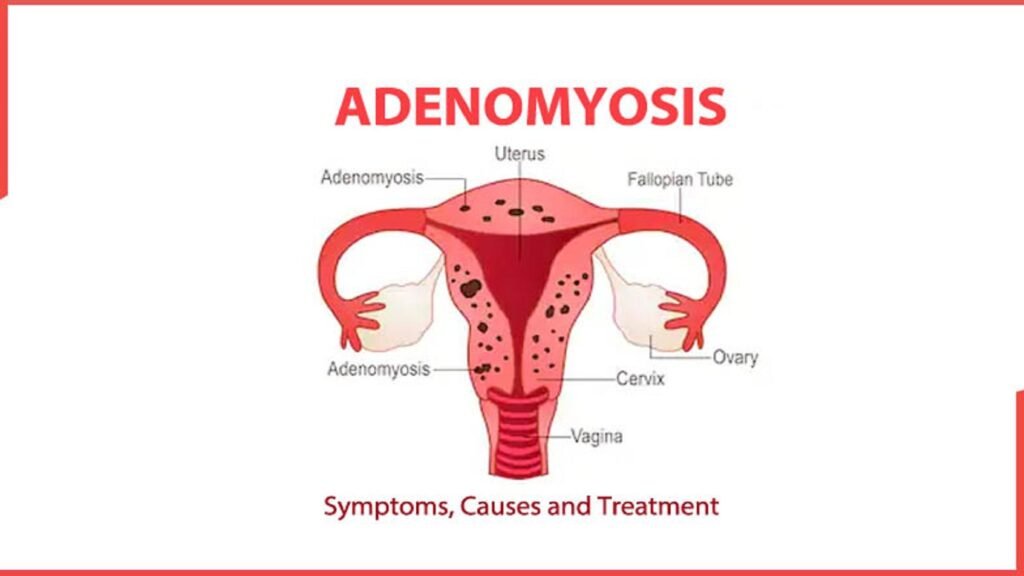
If you are new to the condition, start with our overview of adenomyosis symptoms and treatment. This article goes deeper into each option.
What medicines are used to treat adenomyosis?
Medicines control pain and bleeding by reducing prostaglandins, stabilising clots or suppressing the hormone-sensitive tissue.
Non-hormonal medicines
- NSAIDs (for example mefenamic acid, naproxen or ibuprofen) reduce cramping and can lighten flow. They are suitable while trying to conceive.
- Tranexamic acid is taken only on heavy days and can reduce blood loss considerably. It is not suitable for women with a history of blood clots.
Hormonal medicines
- Levonorgestrel intrauterine system (LNG-IUS): releases progestogen directly into the uterus, reducing bleeding and pain and sometimes shrinking the uterus. It lasts several years. Irregular spotting is common in the first few months.
- Dienogest and other progestogens: tablets that suppress the tissue and reduce pain; side effects can include spotting and mood changes.
- Combined oral contraceptive pill: taken continuously or with fewer breaks to reduce the number of periods.
- GnRH agonists or antagonists: create a temporary low-oestrogen state that shrinks adenomyosis. Because of menopause-like effects and bone loss, they are used short term, often with add-back therapy, or before IVF or surgery.
Why these work is explained in hormones and adenomyosis progression.
What procedures can treat adenomyosis without removing the uterus?
Uterus-sparing procedures are options for women whose symptoms persist on medicines but who wish to keep their uterus.
- Uterine artery embolisation (UAE): a radiologist blocks the arteries supplying the uterus through a small tube in the groin or wrist. Many women report less bleeding and pain, though symptoms can recur.
- High-intensity focused ultrasound (HIFU): focused sound energy heats and destroys the affected tissue without cuts. Availability is limited and suitability depends on the location of disease.
- Adenomyomectomy: surgical removal of a focal adenomyoma, by laparoscopy or open surgery. Because adenomyosis has no clear edge, complete removal is difficult, and the weakened wall needs careful repair.
- Endometrial ablation: destroys the lining to reduce bleeding; it is less effective when adenomyosis is deep and is not suitable if future pregnancy is wanted.
Pregnancy after UAE, HIFU or adenomyomectomy carries specific risks, including a small risk of uterine rupture after surgery. These options need detailed counselling.
When is hysterectomy recommended for adenomyosis?
Hysterectomy is considered when symptoms are severe, other treatments have failed or are unsuitable, and you do not plan future pregnancy.
It can usually be done laparoscopically, which means smaller cuts, less pain and a quicker return to normal activities than open surgery. The ovaries can often be preserved, so removing the uterus does not by itself cause menopause. If deep endometriosis is also present, it needs separate attention; see adenomyosis with deep endometriosis treatment.
How do the adenomyosis treatment options compare?
This table summarises the main options. Your doctor will tailor it to your situation.
| Treatment | Main benefit | Keeps fertility? | Points to consider |
|---|---|---|---|
| NSAIDs / tranexamic acid | Quick, non-hormonal relief | Yes | Symptom control only |
| LNG-IUS | Less bleeding and pain for years | Reversible on removal | Spotting early on; contraceptive |
| Dienogest / combined pill | Pain and bleeding control | Reversible on stopping | Daily tablets; side effects vary |
| GnRH analogues | Strong suppression, uterine shrinkage | Reversible | Short-term use; menopausal effects |
| UAE or HIFU | Avoids major surgery | Uncertain | Limited pregnancy data; recurrence possible |
| Adenomyomectomy | Removes focal disease | Possible | Specialist surgery; rupture risk in pregnancy |
| Hysterectomy | Permanent cure | No | Major surgery; family must be complete |
Which treatment is best if I want to get pregnant?
If you are trying to conceive, hormonal contraceptive treatments are paused and the focus shifts to fertility.
Options include short-term pain relief, a course of GnRH agonist before frozen embryo transfer in IVF, and occasionally surgery for a large focal adenomyoma. These approaches are explained in adenomyosis and fertility.
When to see a gynaecologist
Book a review with a gynaecologist if your current treatment is not working or causes troublesome side effects. Seek care promptly for:
- Bleeding heavy enough to soak a pad hourly, or clots larger than a coin
- Symptoms of anaemia such as tiredness, breathlessness or palpitations
- Severe pelvic pain that stops daily activities
- New pain, fever or unusual discharge after a procedure or IUS insertion
- Bleeding after menopause
How Dr. Divya Venugopalan can help
Dr. Divya Venugopalan discusses every reasonable option for adenomyosis treatment, from medicines and the hormonal IUS to surgery, and helps you weigh benefits, risks and your plans for pregnancy.
With a Fellowship in Minimal Access Surgery (FMAS), she performs laparoscopic surgery and hysteroscopy where these are appropriate, and she coordinates referral for radiology procedures such as embolisation when needed. As a reproductive medicine specialist (FRM), she can plan treatment around fertility.
Book an appointment at Thanisandra, Sahakar Nagar or HRBR Layout.
Frequently asked questions
What is the first-line treatment for adenomyosis?
For women not planning pregnancy, the hormonal IUS is commonly the first choice, often with NSAIDs or tranexamic acid. Women trying to conceive usually start with non-hormonal pain relief.
Can medicines shrink adenomyosis?
GnRH analogues can shrink the uterus temporarily, and the hormonal IUS may reduce its size over time. The effect usually reverses after stopping treatment.
Is dienogest safe for long-term use?
Dienogest is used for long periods in many women and is generally well tolerated. Your doctor will review side effects such as spotting or mood change and monitor you regularly.
Does adenomyosis come back after treatment?
Symptoms often return when hormonal treatment stops, and can recur after uterus-sparing procedures. Only hysterectomy removes the condition permanently.
How long is recovery after laparoscopic hysterectomy?
Most women go home within one to two days and return to light activities in two to three weeks. Full recovery usually takes around six weeks.
Medically reviewed by: Dr. Divya Venugopalan, MBBS, DNB (OBG), FRM, FMAS. Gynaecologist & fertility specialist, Bengaluru (KMC Reg. No. 91293). Last reviewed: 27 October 2026.
This article is for general information and does not replace a personal consultation. In an emergency, visit the nearest hospital emergency department.