
Fibroid Treatment in Bengaluru
Quick answer: Fibroid treatment in Bengaluru depends on your symptoms, the size and position of the fibroids and whether you want a pregnancy. Small fibroids without symptoms usually need only monitoring. Heavy bleeding can be controlled with medicines, while troublesome fibroids can be removed by hysteroscopy or laparoscopic myomectomy, keeping the uterus intact.
Key takeaways
- Fibroids are very common, non-cancerous growths of the womb muscle.
- Many fibroids cause no symptoms and never need treatment.
- Treatment is guided by symptoms and fertility plans, not by size alone.
- Fibroids inside the uterine cavity are the type most likely to affect fertility and bleeding.
- Myomectomy keeps the uterus; hysterectomy is a permanent cure for women who have completed their family.
What are uterine fibroids?
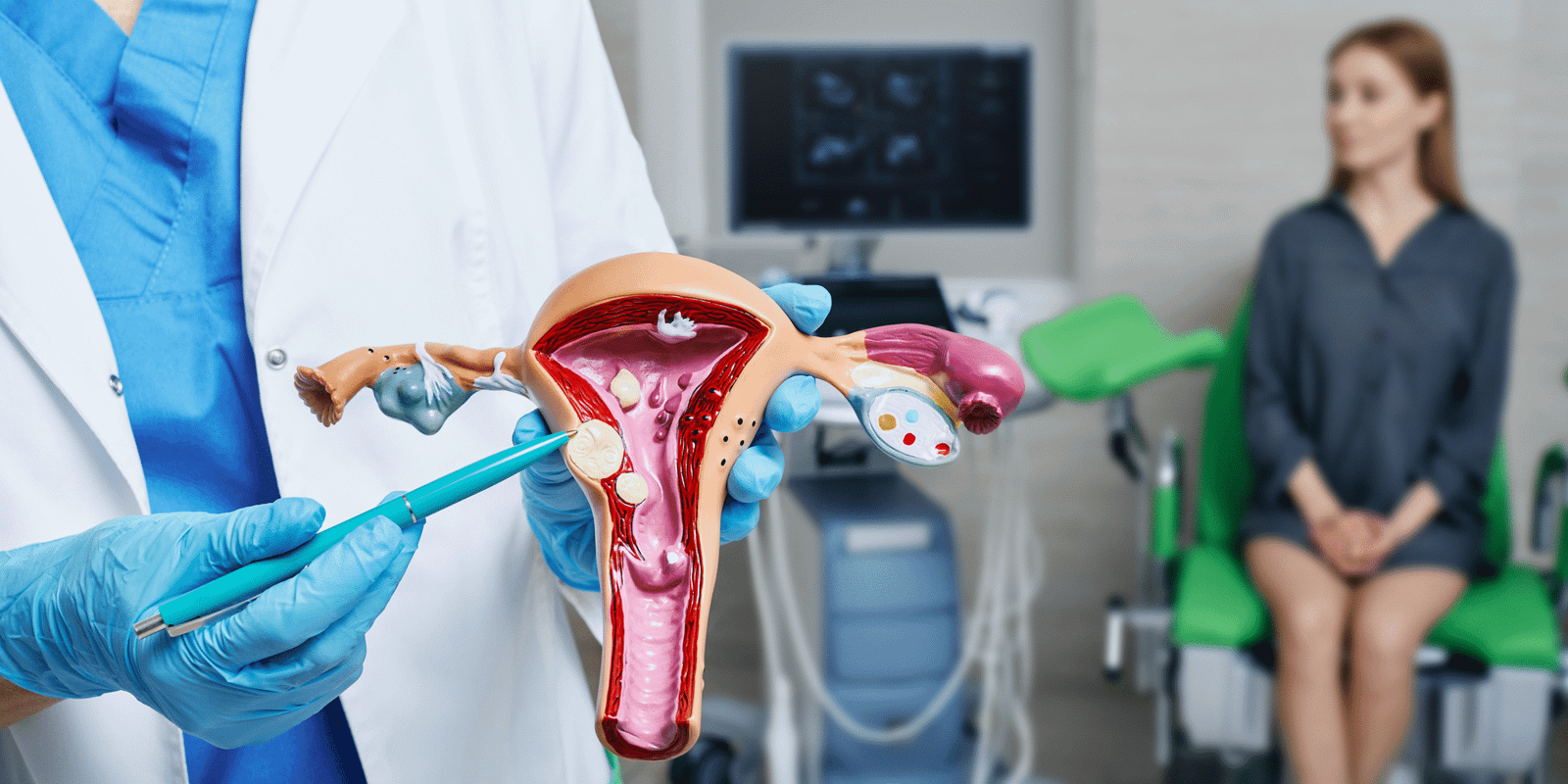
Uterine fibroids (leiomyomas or myomas) are benign growths of the muscle wall of the uterus. They range from the size of a seed to larger than a melon, and you can have one or many.
They are grouped by where they grow, which strongly affects symptoms and treatment:
- Submucosal: bulging into the uterine cavity; often cause heavy bleeding and can affect implantation.
- Intramural: within the muscle wall; larger ones can enlarge the uterus and cause heavy periods.
- Subserosal: on the outer surface; may press on the bladder or bowel.
- Pedunculated: attached by a stalk, inside or outside the uterus.
Common symptoms
- Heavy or prolonged periods, sometimes with clots, leading to anaemia
- Pelvic pressure, a feeling of fullness or a visible swelling of the lower abdomen
- Frequent urination or constipation
- Pain during periods or intercourse
- Difficulty conceiving or recurrent miscarriage in some cases
Who needs fibroid treatment?
You need treatment if fibroids cause heavy bleeding, anaemia, pain or pressure symptoms, if they distort the uterine cavity while you are trying to conceive, or if they are growing quickly.
Women without symptoms are usually monitored with a scan every 6–12 months. Fibroids tend to shrink after menopause, so women close to menopause can often avoid surgery.
What are the treatment options for fibroids?
The choice is personal and balances symptom relief, fertility wishes and recovery time.
| Option | Best suited for | Keeps fertility? |
|---|---|---|
| Watchful waiting | No or mild symptoms | Yes |
| Medicines (tranexamic acid, NSAIDs, hormonal IUS, progestins) | Heavy bleeding with small fibroids | Yes (IUS is reversible) |
| GnRH analogues or newer oral antagonists | Short-term shrinkage before surgery, or near menopause | Yes, temporary effect |
| Hysteroscopic myomectomy | Submucosal fibroids inside the cavity | Yes |
| Laparoscopic myomectomy | Intramural or subserosal fibroids of suitable size and number | Yes |
| Open myomectomy | Very large or numerous fibroids | Yes |
| Hysterectomy | Family complete, severe symptoms | No |
Uterine artery embolisation, done by an interventional radiologist, is another option for some women who do not plan a pregnancy.
What to expect: step by step
- Consultation: a history of your periods, symptoms and pregnancy plans.
- Ultrasound: a transvaginal and abdominal scan maps the number, size and location of fibroids. MRI helps when there are many fibroids or surgery is being planned.
- Blood tests: haemoglobin and iron studies; anaemia is corrected before any surgery.
- Treatment plan: Dr. Divya explains the options that suit your fibroid type and goals.
- Procedure (if needed): pre-operative tests and anaesthesia check, then surgery under general or spinal anaesthesia.
- Follow-up: a review at 1–2 weeks and a scan later to confirm the result.
What results can you realistically expect?
Most women who have symptomatic fibroids removed notice a clear improvement in bleeding and pressure symptoms.
Removing a submucosal fibroid often improves heavy bleeding and may improve the chance of pregnancy. After myomectomy, new fibroids can develop over the years, because the tendency to form them remains; the risk is higher when there were many fibroids. Medicines relieve symptoms while taken, but fibroids may regrow after they are stopped. Hysterectomy is the only treatment that guarantees fibroids will not return.
What are the risks and side effects?
- Medicines: irregular spotting, hot flushes and bone thinning with longer GnRH use.
- Myomectomy: bleeding (occasionally needing transfusion), infection, adhesions, and rarely conversion from keyhole to open surgery.
- Hysteroscopic surgery: fluid overload, perforation of the uterus and scarring inside the cavity (all uncommon).
- Pregnancy after myomectomy: a deep myomectomy scar may mean a planned caesarean section is advised, and a gap of a few months is usually recommended before trying to conceive.
Recovery and aftercare
After hysteroscopic myomectomy, most women go home the same day and return to normal activity in 2–3 days. After laparoscopic myomectomy, a hospital stay of 1–2 days and a return to desk work in about 2 weeks is typical; open surgery needs 4–6 weeks. Avoid heavy lifting for several weeks, take iron supplements if you were anaemic, and report fever, heavy bleeding or increasing pain promptly.
What does fibroid treatment cost in Bengaluru?
Costs vary widely because no two fibroid cases are the same. The main factors are:
- scans (ultrasound, MRI) and blood tests;
- the number, size and location of fibroids;
- the procedure chosen (medicines, hysteroscopy, laparoscopy, open surgery or hysterectomy);
- hospital room category, anaesthesia, operating time and length of stay;
- health insurance coverage.
You will receive an estimate once your scan has been reviewed and a plan has been agreed.
When to see a doctor
See a gynaecologist if you soak a pad or tampon every hour or two, pass large clots, feel tired or breathless from anaemia, notice a swelling in your lower abdomen, or have trouble conceiving. Go to an emergency department for very heavy bleeding with dizziness or fainting, or sudden severe pelvic pain.
Why choose Dr. Divya Venugopalan?
Dr. Divya Venugopalan has over 14 years of experience in gynaecology and holds a DNB in Obstetrics and Gynaecology and a Fellowship in Minimal Access Surgery (FMAS), so she performs both hysteroscopic and laparoscopic fibroid surgery. Her Fellowship in Reproductive Medicine (FRM) helps when fibroids and fertility need to be managed together.
She consults at Thanisandra, Sahakar Nagar and HRBR Layout in North Bengaluru. You may also find our guide on heavy menstrual bleeding useful. Book a consultation to discuss your scan.
Frequently Asked Questions
Do fibroids need to be removed?
Not always. Small fibroids that cause no symptoms can simply be monitored with periodic scans. Removal is advised when fibroids cause heavy bleeding, pain or pressure, distort the uterine cavity, or affect fertility.
Can fibroids turn into cancer?
Fibroids are benign and almost never become cancerous. A rare cancer called leiomyosarcoma can look similar, so rapid growth, especially after menopause, should be assessed promptly.
Can I get pregnant with fibroids?
Many women with fibroids conceive and have healthy pregnancies. Fibroids inside the uterine cavity can affect implantation and are often removed before trying. Your doctor will advise based on the size and position of the fibroids.
Can fibroids come back after myomectomy?
Yes, new fibroids can grow after myomectomy because the tendency to form them remains. The chance is higher when there were many fibroids. Regular follow-up scans help detect regrowth early.
Can fibroids shrink without surgery?
Fibroids usually shrink after menopause as hormone levels fall. Some medicines shrink them temporarily, but they often regrow once treatment stops. No diet or supplement has been proven to dissolve fibroids.
How long is recovery after laparoscopic myomectomy?
Most women stay in hospital for one to two days and return to desk work in about two weeks. Heavy lifting and strenuous exercise are usually avoided for four to six weeks.
Medically reviewed by: Dr. Divya Venugopalan, MBBS, DNB (OBG), FRM, FMAS. Gynaecologist & fertility specialist, Bengaluru (KMC Reg. No. 91293). Last reviewed: 27 October 2026.
This page is for general information and does not replace a personal consultation. In an emergency, visit the nearest hospital emergency department.
Book a consultation with Dr. Divya → or call +91 99459 26987 (Mon–Sat, 10 AM–1 PM and 3–8 PM).